
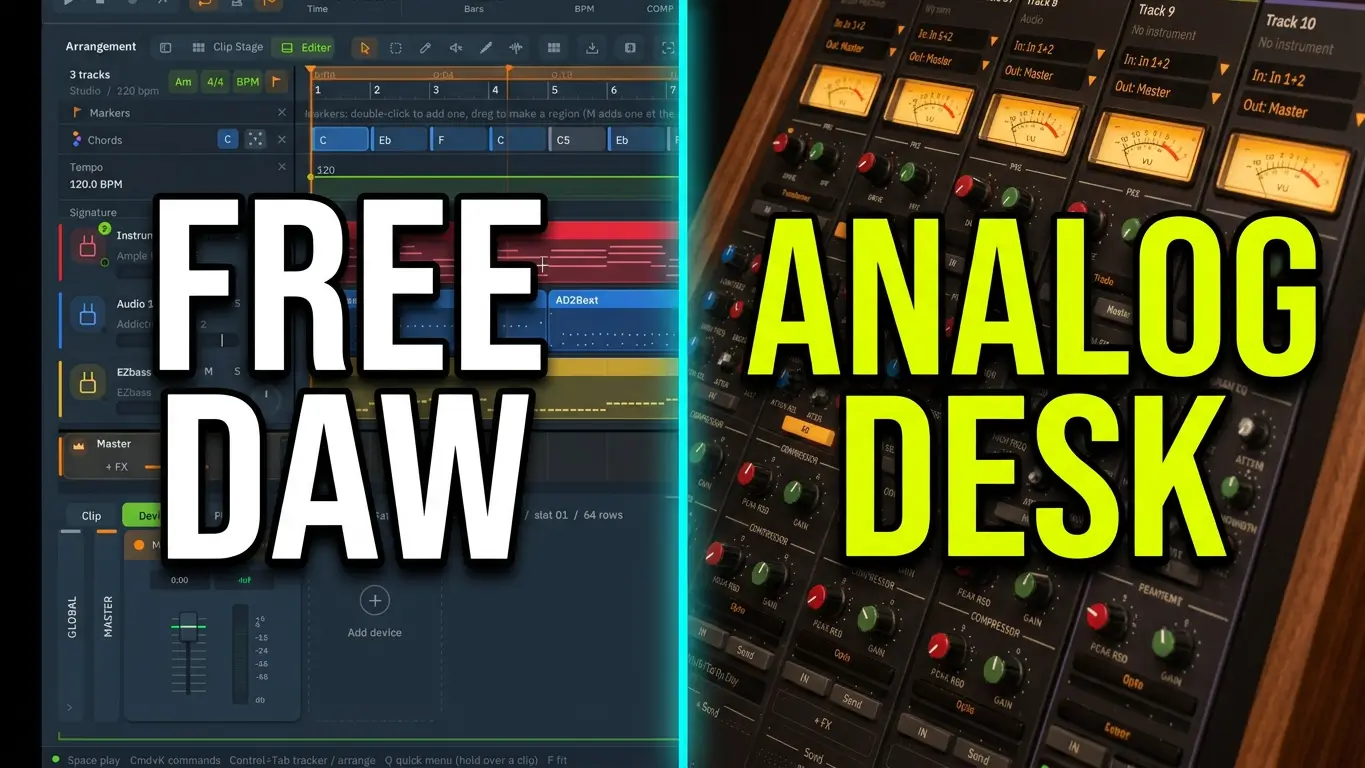
MorningDAW has introduced a new Analog Mixing Pack that brings vintage console-style mixing, EQ, compression, reverb, and delay into its digital audio workstation. The paid add-on is available at an introductory price of $49, giving users another option for shaping their mixes without leaving MorningDAW.
But is an analog-style mixer worth paying extra for? I took a look at the new features, explored the available processing tools, and considered whether the additional mixing workflow justifies the price.
Watch the video below for a quick look at MorningDAW’s new Analog Mixing Pack.
What Is the MorningDAW Analog Mixing Pack?
The Analog Mixing Pack is a paid expansion designed to recreate the workflow of traditional analog mixing consoles from the 1970s and 1980s.
Rather than using only the standard mixer interface, users can switch to a console-style layout where each track becomes an individual channel strip. Each channel includes a VU meter, preamp, EQ, compressor inserts, sends, pan control, and a long fader.
The idea is to bring more of the traditional mixing desk experience into a modern DAW.
The pack costs £49 at its introductory price, so it is important to distinguish these additional features from the core MorningDAW software.
The approach is similar to the broader model used by other music production platforms, where a DAW provides the main production environment and additional products offer specialized mixing tools.
Analog EQ, Compression, and Console Coloration
The Analog Mixing Pack includes several processing options inspired by vintage recording equipment.
The preamp section offers tape, Class A, and transformer-style coloration. An automatic level-matching feature helps users compare these options without mistaking a simple increase in volume for a tonal improvement.
The EQ section includes a program EQ inspired by classic analog designs. For dynamics processing, the pack offers opto, FET, and VCA compressor types, providing different approaches to controlling transients and shaping the sound of individual tracks.
These tools are integrated into the channel strips rather than being presented exclusively as separate plug-in windows.
Users can also switch between the analog console view and the standard mixer while retaining their settings. This allows them to explore the alternative workflow without having to rebuild their mix.
Vintage-Inspired Delay and Reverb
The effects included in the Analog Mixing Pack extend beyond EQ and compression.
The delay section features BBD, or bucket-brigade device, delay inspired by analog guitar pedals and rack-mounted effects units.
The retro reverb section includes hall, plate, and room sounds, along with gated snare and reverse reverb options. These effects can be useful for adding space, character, and vintage-inspired ambience to different musical styles.
Having these processing options integrated into the mixing environment may appeal to users who prefer working within a unified interface.
However, whether these features justify the additional cost depends on your existing plug-in collection, mixing preferences, and interest in the console workflow.
MorningDAW’s MIDI and Songwriting Workflow
While exploring the new mixing features, I also spent some time working with MorningDAW’s MIDI tools.
One of the things I particularly like about MorningDAW is its MIDI functionality. The chord track makes it possible to build musical ideas using block chords and then modify individual notes to create a more natural arrangement.
In my guitar example, I started with the chord track, used block chords as the foundation, and changed some notes to develop a strummed part.
I’ve also experimented with MorningDAW’s chord progression tools to create a quick lo-fi beat using virtual instruments. Once you become familiar with the workflow, it can be a fast way to move from a chord progression to a musical idea.
These songwriting features are a separate reason to explore MorningDAW, regardless of whether you decide to purchase the Analog Mixing Pack.
Is the MorningDAW Analog Mixing Pack Worth It?
At an introductory price of £49, the Analog Mixing Pack is an additional investment rather than an essential upgrade for every user.
If you enjoy working with console-style channel strips and want integrated analog-inspired EQ, compression, delay, and reverb, the pack may be worth investigating.
On the other hand, if you already have a collection of mixing plug-ins that meets your needs, the additional console interface may not offer enough value to justify the expense.
I’m still exploring MorningDAW, so I’m not ready to make a definitive judgment about the add-on. The features are interesting, but whether I would invest $49 simply to get a console-style mixer is another question.
Would you pay $49 to bring an analog console into your DAW, or would you stick with the mixer and plug-ins you already have? Share your thoughts in the comments.
The right choice ultimately comes down to how you work, which tools you already own, and whether the new workflow makes a meaningful difference to your music production.
Check Out MorningDAW

Leave a Reply