
What Is the UAD EMT 140?
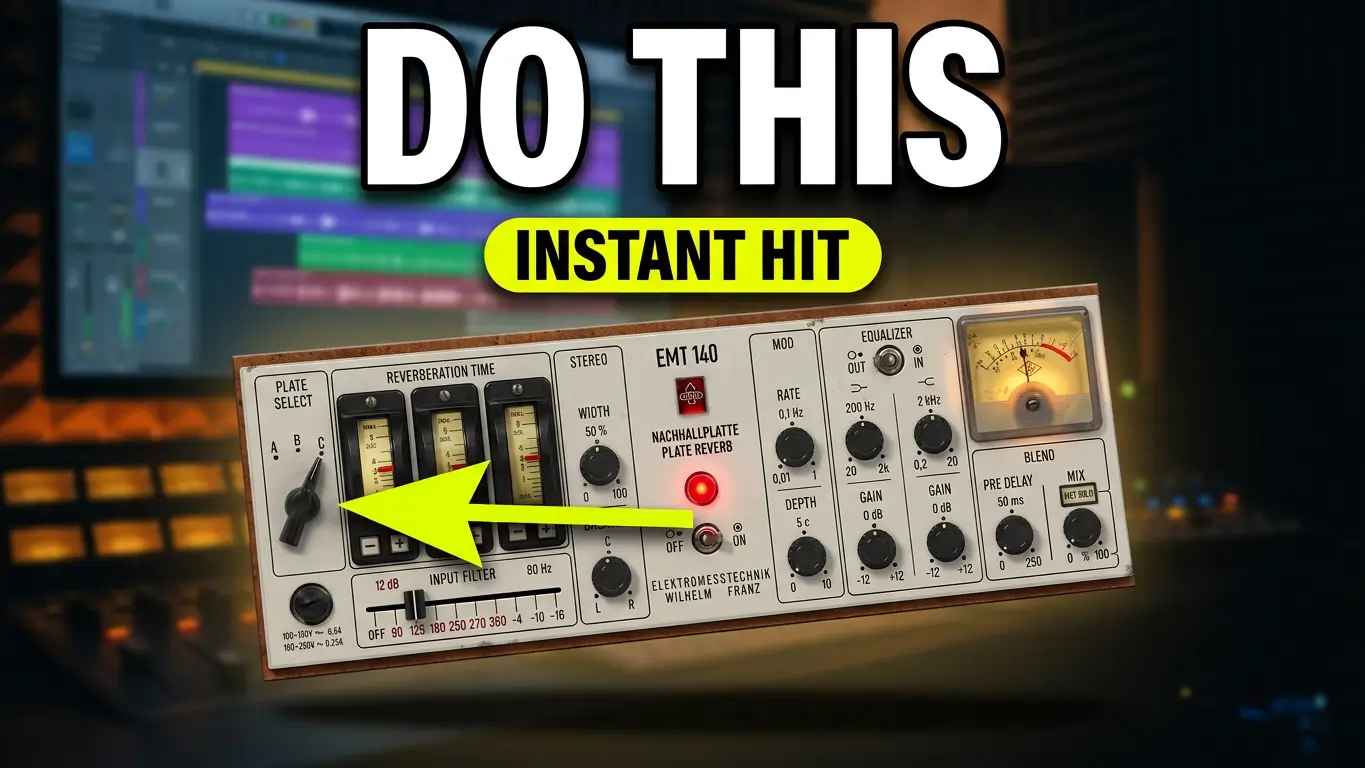
The UAD EMT 140 is a software recreation of the classic EMT 140 plate reverb, one of the most recognizable mechanical reverb systems in recording history.
Unlike a room or hall reverb, a plate reverb creates its sound by sending an audio signal through a large metal plate and capturing the resulting vibrations. The result is a dense, smooth and sustained reverb that has been widely used on vocals, drums, guitars, keyboards, strings and other instruments.
The UAD EMT 140 goes beyond simply recreating the original hardware. It includes three different plate models, additional stereo controls, modulation, modern filtering and other features designed for working inside a modern DAW.
This guide walks through the main features and controls of the UAD EMT 140 and explains what each one does.
Three Different EMT 140 Plates
One of the main features of the UAD EMT 140 is the ability to choose between three different modeled plates.
Plate A and Plate B
Plate A and Plate B are based on original EMT electronics and plates that had developed a more worn-in character over time.
These models provide different variations of the classic EMT plate sound while retaining the character associated with the original hardware.
Plate C
Plate C is based on a fully serviced plate and electronics, providing a more open, full-frequency character.
Having three different plate models means the EMT 140 isn’t limited to one fixed reverb sound. You can choose the plate that best fits the source and the production.
Reverb Time
The Reverb Time control determines how long the plate continues to resonate.
The available range extends from approximately half a second to 5.5 seconds.
Shorter settings can create a tighter ambience, while longer settings produce a large, sustained reverb tail.
This makes the control useful for everything from adding a small amount of space to creating a much larger atmospheric effect.
Input Filtering
The Input Filter controls the low-frequency content going into the reverb.
The UAD EMT 140 provides two filter approaches: the original EMT filter and the Martech filter.
The original EMT filter provides three levels of attenuation, while the Martech filter provides several shelving-frequency options.
The filter type can be used with any of the three plate models, giving you additional control over how much low-frequency information reaches the reverb.
Filtering the input can be particularly useful when you want to prevent excessive low end from building up in the reverb.
Two-Band EQ
The EMT 140 also includes a two-band shelving EQ with Low and High controls.
Each band can be boosted or cut by up to 12 dB.
Because the EQ shapes the reverb signal, you can change the character of the plate without directly changing the original dry source.
This makes it possible to create a darker, warmer reverb or a brighter and more open sound directly inside the plug-in.
Width and Balance
The UAD version also adds controls that were not part of the original EMT hardware.
Width controls the stereo spread of the reverb, from completely mono at zero percent to full stereo at 100 percent.
Balance controls the relative level between the left and right reverb channels.
Together, these controls provide more control over where the reverb sits in a stereo mix.
You can create a wide stereo plate, narrow it toward the center, or shift the balance toward one side of the stereo field.
Modulation
The Modulation section adds movement to the reverb tail.
The EMT 140 uses an LFO with Rate and Depth controls to modulate the reverb time.
Subtle modulation can add movement and dispersion to the reverb, while stronger settings produce a more noticeable effect.
Modulation can also help reduce ringing, particularly with percussion and sounds that have abrupt endings.
Predelay
Predelay controls the amount of time between the original dry signal and the beginning of the reverb.
The UAD EMT 140 provides a range from zero to 250 milliseconds.
With no predelay, the reverb begins immediately with the source.
Increasing the predelay creates separation between the original sound and the reverb, which can help a vocal or other important source remain clear while still having a substantial reverb around it.
Mix
The Mix control determines the balance between the dry and wet signals.
At the bottom of the range, the signal is completely dry. At the top, the signal is 100 percent wet.
The control can be used to blend the plate into the original sound or create a fully processed reverb signal.
Wet Solo
Wet Solo switches the plug-in to a 100 percent wet output.
This is particularly useful when using the EMT 140 on an auxiliary or effects bus, where the original dry signal normally remains on the source track.
It allows the reverb return to contain only the processed signal.
Output VU Meter and Power
The UAD EMT 140 includes a vintage-style output VU meter for monitoring the plug-in’s output level.
The Power switch bypasses the plug-in, making it easy to compare the processed signal with the original.
These are simple features, but they are useful when evaluating how much the reverb is changing the source.
Hearing the UAD EMT 140
Understanding the controls is one thing. Hearing what they actually do is another.
In the video at the top of this article, the UAD EMT 140 is demonstrated after each of its major features has been explained.
The demonstration compares the three plate models and explores changes to reverb time, filtering, EQ, stereo Width, Balance, modulation and predelay.
The goal is to hear how each control changes the character, timing and placement of the plate rather than simply listing what each control does.
The UAD EMT 140 in a Modern DAW
The original EMT 140 was designed around a very specific mechanical approach to creating reverb. The UAD version keeps that fundamental character while adding controls that make the effect easier to integrate into a modern digital production environment.
The three plate models provide different tonal starting points. Reverb Time controls the length of the decay, while filtering and EQ shape the frequency response. Width and Balance control the stereo image, modulation adds movement, and predelay creates separation between the source and the reverb.
The result is a plate reverb that can cover everything from a subtle vocal ambience to a long, sustained and highly noticeable reverb tail.
That combination of classic plate character and modern DAW control is what makes the UAD EMT 140 useful beyond simply being a recreation of vintage hardware.
Plugin Boutique
The UAD EMT 140 is also available through Plugin Boutique.
Plugin Boutique offers a different free gift each month with a qualifying paid purchase. The available free gift changes, so it is worth checking the current offer when purchasing.
The links to Plugin Boutique are affiliate links, meaning I may earn a small commission if you purchase through them. This helps support the channel at no extra cost to you. I only recommend products I personally use or believe bring real value to producers and songwriters.
Final Thoughts
The EMT 140 is a very specific type of reverb, but that specificity is part of its appeal.
Rather than trying to simulate every possible acoustic space, the plug-in focuses on the distinctive sound of a plate reverb and gives you multiple ways to shape it.
Three plate models, adjustable reverb time, input filtering, EQ, stereo controls, modulation, predelay, Mix and Wet Solo provide enough flexibility to use the EMT 140 in a wide range of productions while retaining the character associated with the original EMT design.
If you’ve ever looked at those levers and wondered what they actually do, the video above walks through the entire plug-in and then lets you hear the controls in action.

Leave a Reply