
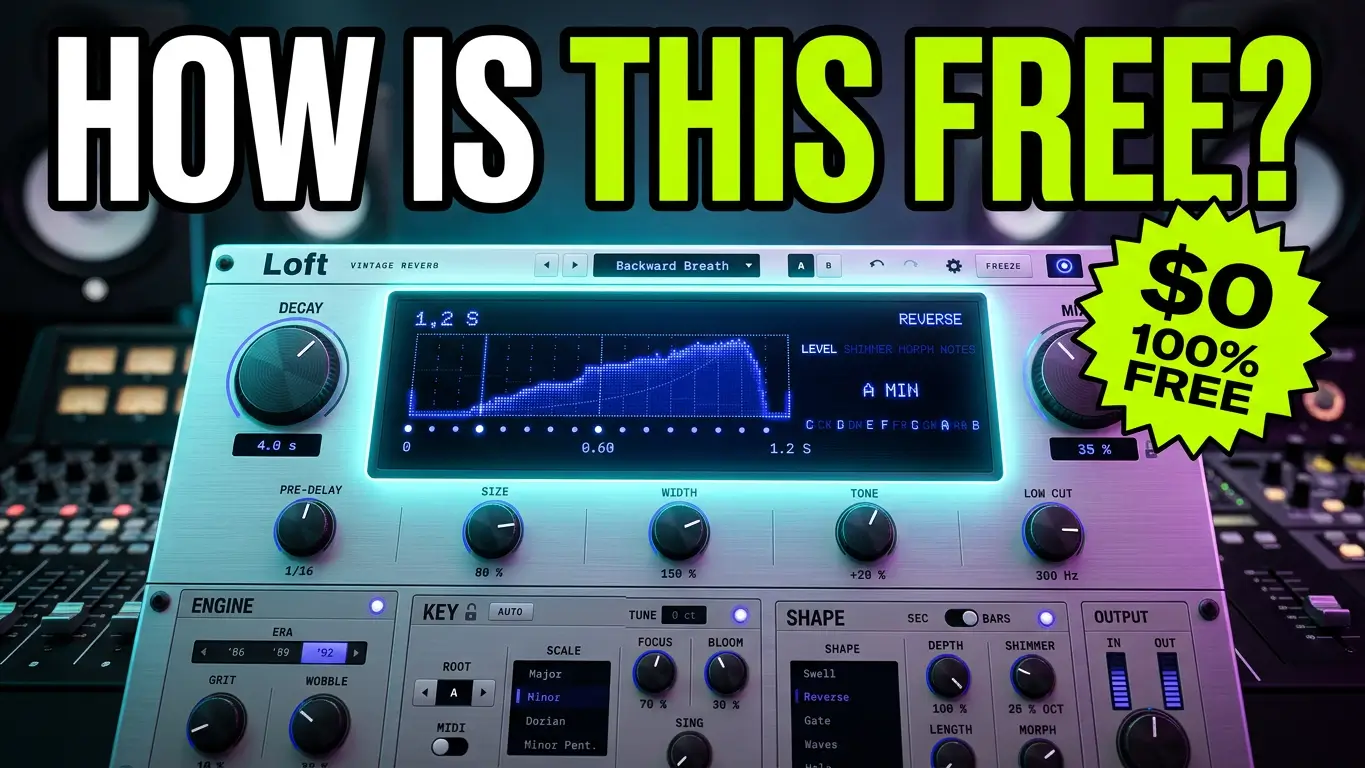
Loft Reverb Design is a free reverb plugin that goes beyond traditional room and space effects. It combines tempo-synchronized reverb patterns, automatic kick-triggered ducking, key-tuned resonators, and three vintage-inspired digital reverb engines.
What makes it interesting is how much control it gives you over the character and movement of the reverb. Instead of simply adding ambience to a track, you can use it to create rhythmic effects, unusual textures, and more experimental sound design.
Watch the video below for a closer look at Loft Reverb Design and hear it processing several of my original songs.
Tempo-Synchronized Reverb Patterns
One of the standout features of Loft Reverb Design is its ability to synchronize the reverb tail to your DAW’s tempo.
There are five different pattern options, including Offbeat, Pump, Garage, Shuffle, Disco Swing, Four Floor, and Halftime. These patterns change how the reverb responds rhythmically, allowing it to follow the groove of your track rather than simply creating a continuous wash of ambience.
This can be particularly useful for electronic music, dance productions, and tracks where rhythmic effects play an important role.
Automatic Kick Ducking
Loft Reverb Design also includes a Duck feature that automatically reduces the reverb when the kick drum hits.
You can configure it to detect the kick directly or use an external sidechain input. This helps keep the low end and kick drum clear while allowing the reverb to fill the spaces between hits.
It’s a useful feature for maintaining separation in busy mixes without having to manually automate the reverb level.
Keep Your Reverb In Key
Another interesting feature is the collection of 60 tuned resonators.
These resonators are designed to keep the reverb in the musical key of your song. This adds another creative dimension to the effect, particularly when working with melodic material, vocals, and synthesizers.
Three Vintage Digital Reverb Engines
The plugin includes three different digital engines labeled 1986, 89, and 92.
These recreate the character of older digital reverb hardware. You also get adjustable Grit and Wobble controls to introduce additional digital character, instability, and texture.
For more conventional reverb processing, the plugin includes controls for:
- Decay
- Pre-Delay
- Size
- Width
- Tone
- Bass Management
There’s also a Freeze button that holds the reverb tail. This can be useful for creating sustained pads, atmospheric textures, and transitions during breakdowns.
Creative Sound Design Possibilities
In my video demonstration, I use Loft Reverb Design on several of my own songs to explore what happens when you move beyond conventional reverb settings.
The results range from rhythmic processing to more unusual textures and glitch-inspired effects.
Of course, you don’t have to use all these features. Loft Reverb Design can also function as a straightforward reverb when you simply want to add space to an instrument or vocal.
Plugin Compatibility
Loft Reverb Design supports:
- VST3 and Audio Units on macOS
- VST3 on Windows
This makes it compatible with a variety of music production environments.
Final Thoughts
Loft Reverb Design is an interesting free reverb plugin because it combines traditional reverb controls with several creative features that can change how the effect interacts with your music.
The tempo-synchronized patterns, kick ducking, tuned resonators, and vintage digital engines provide plenty of possibilities for both mixing and sound design.
If you’re looking for something beyond a conventional reverb, it’s worth exploring.

Leave a Reply