
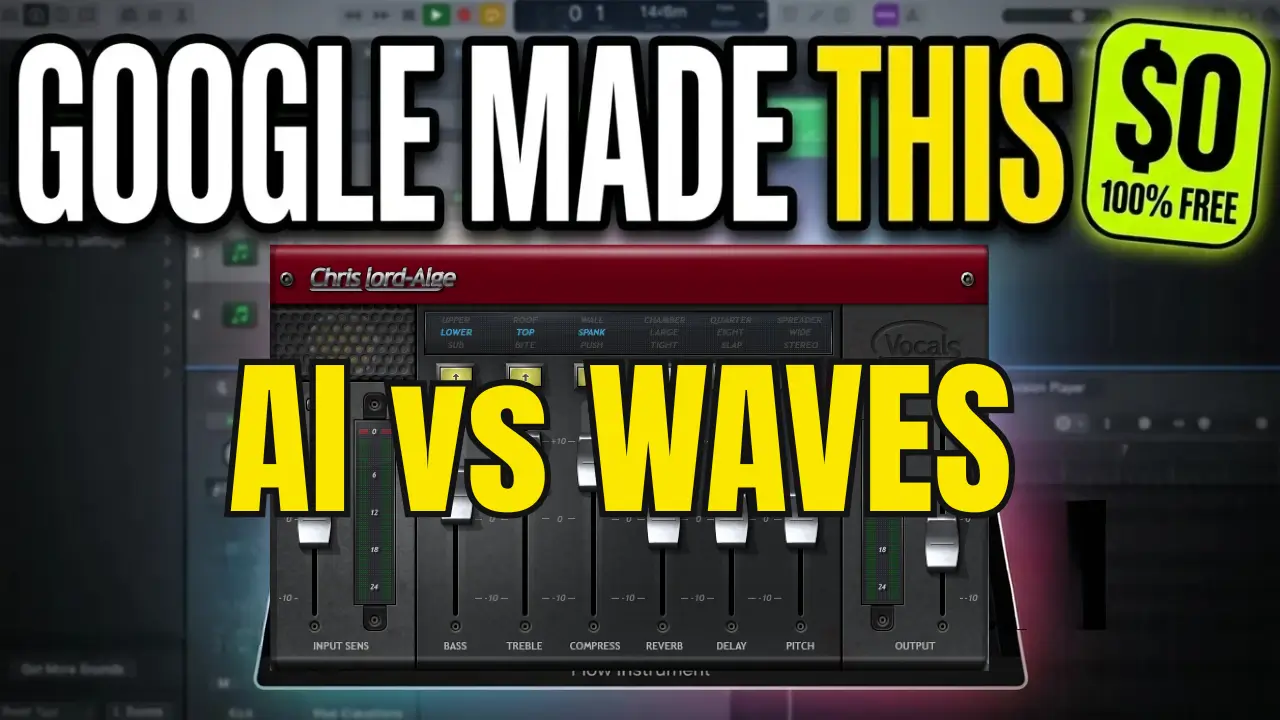
Can you tell the difference between the real Waves CLA vocal plugin and a vocal plugin created with Google Flow AI? I put the two to the test in a blind listening comparison, and now it’s time to reveal the results.
In my original video, I demonstrated a CLA-style vocal plugin that I created using Google Flow Music. I asked viewers to listen to the audio and decide which version sounded better without knowing which plugin was responsible. The video attracted nearly 6,000 views, and viewers wanted to know the answer.
Now, the results are in.
Watch the AI vs. Waves CLA Blind Test Results
Watch the video below to hear the vocal examples again and discover which plugin was which.
How I Created a Vocal Plugin With Google Flow AI
About a week before this follow-up video, I asked Google Flow to create a vocal plugin inspired by the CLA-style vocal processing approach.
The experiment produced a plugin with a similar general concept to the familiar vocal processing tools used by music producers. I then used it in a blind listening test to see whether viewers could distinguish it from the real Waves CLA vocal plugin.
The idea was straightforward: play the audio examples without revealing which plugin was being used, let people make their own judgments, and reveal the answer afterward.
The experiment also raised a bigger question about AI-assisted software development. If an AI tool can help create a working audio plugin, how far could this technology eventually go?
The Blind Test: Could You Hear the Difference?
Blind listening tests are useful because they encourage listeners to focus on the sound rather than the product name, reputation, or appearance of a plugin interface.
In the original test, viewers were asked which vocal example sounded better. Without knowing which version came from the real CLA plugin and which came from my Google Flow experiment, they had to rely on their ears.
In the results video, I replay the vocal passages and reveal which plugin was responsible for each version.
The examples feature lyrics from one of my original songs, including the repeated lines “No more pushing me down” and “No more twisting all my words.” Using the same musical passage helps keep the comparison focused on the vocal sound.
The goal isn’t to claim that two plugins are identical or that one will always sound better. Vocal processing results depend on the source recording, settings, mixing context, and personal preference.
Another Developer Created a More Feature-Rich Plugin
After the original video, viewers asked whether they could download the plugin I created with Google Flow. I hadn’t provided a download link for my experiment.
However, another developer created a similar vocal plugin with additional features and made it available to download. I discuss that project in the earlier video and provide a link in its description for anyone interested in trying it.
This is another example of how AI-assisted development and independent plugin creation can inspire new tools for music production.
Can AI Compete With Established Audio Plugin Companies?
The experiment raises an interesting question about the future of audio software. Established developers such as Waves have spent years building and refining professional audio plugins, while AI-assisted tools are giving creators new ways to explore software ideas.
Creating a plugin concept is only one part of the process. Audio quality, processing algorithms, stability, compatibility, and practical performance all matter when evaluating a professional tool.
A blind test involving two plugins cannot settle the broader question of whether AI can outperform established developers. It can, however, encourage music producers to listen critically and consider how these new tools might fit into their workflows.
What Did You Think of the Results?
Have you watched the original blind test? Did you correctly identify the real Waves CLA vocal plugin, or did the Google Flow version fool your ears?
Watch the results video above and share your thoughts. I’m interested in hearing how other producers judge the differences and what they think about AI-assisted audio plugin development.
The bigger question remains: could AI eventually help create plugins that compete with established names in music production?
Leave a Reply